


To travel well, it is not enough to spare your mount! To make the journey more pleasant you can also choose a theme to follow along the stages. Why not take an interest, for example, in history and religious heritage along the stops? Follow “The Cathedral Route” aboard La Scandibérique!
From Beauvais to Corbeil, via Créteil
At its starting point in France, La Scandibérique crosses the départements of the Nord, the Aisne and then the Oise. The 60 churches of the Thiérache, in the Aisne, mostly fortified in the 16th century by the villagers themselves, weary of pillaging and the ravages of war, recall the whole historical richness of this border territory with its unique heritage.
Then you can take a slight detour from your route to discover one of the most beautiful cathedrals in France, that of Beauvais. Placed under the protection of Saint Peter, the cathedral that the architect Viollet-le-Duc considered “the Parthenon of French architecture” raises its lofty silhouette and its 48.5 m Gothic choir (the highest in the world) above the town. Among other curiosities, Saint-Pierre cathedral in Beauvais has two clocks, a chiming one and an astronomical one. At the top of the latter, 68 automata come to life to tell the story of the Last Judgement.
After the Oise comes the Val-de-Marne and the town of Créteil, famous for its Notre-Dame cathedral. Built in 1966 and remodelled between 2013 and 2015, its very contemporary architecture surprises as much as it charms: two domes joined together form its nave, symbolising two hands joined in prayer.
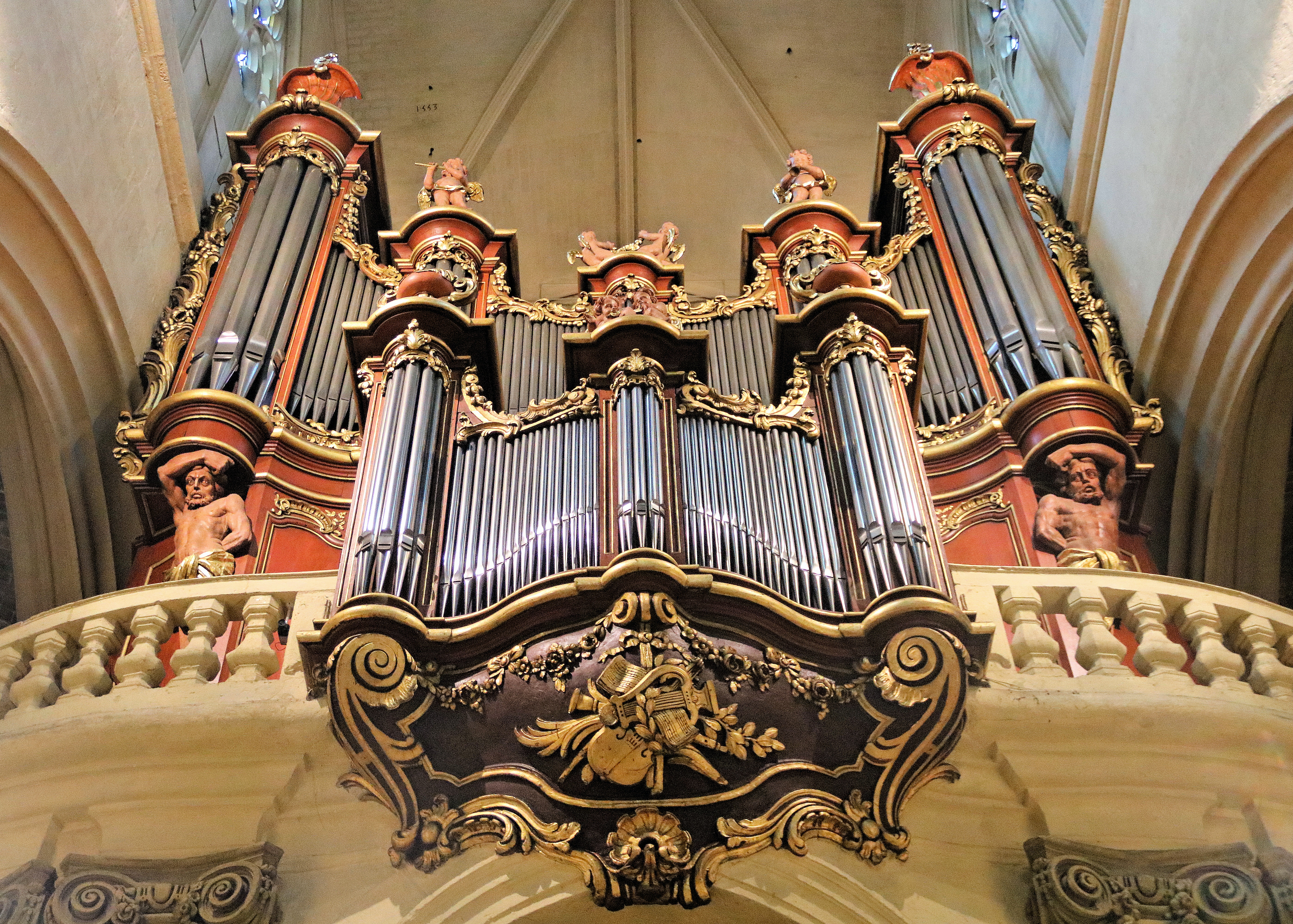
A few more turns of the pedals and you will be in the Essonne. In the historic centre of Corbeil, Saint-Spire is a former collegiate church raised to the rank of cathedral in 1966. You can admire its cloister, closed by a pointed-arch door, and the centrepiece of its furnishings, a carved wooden organ case dating from the 17th century. But first, you have an appointment with history… in Paris!
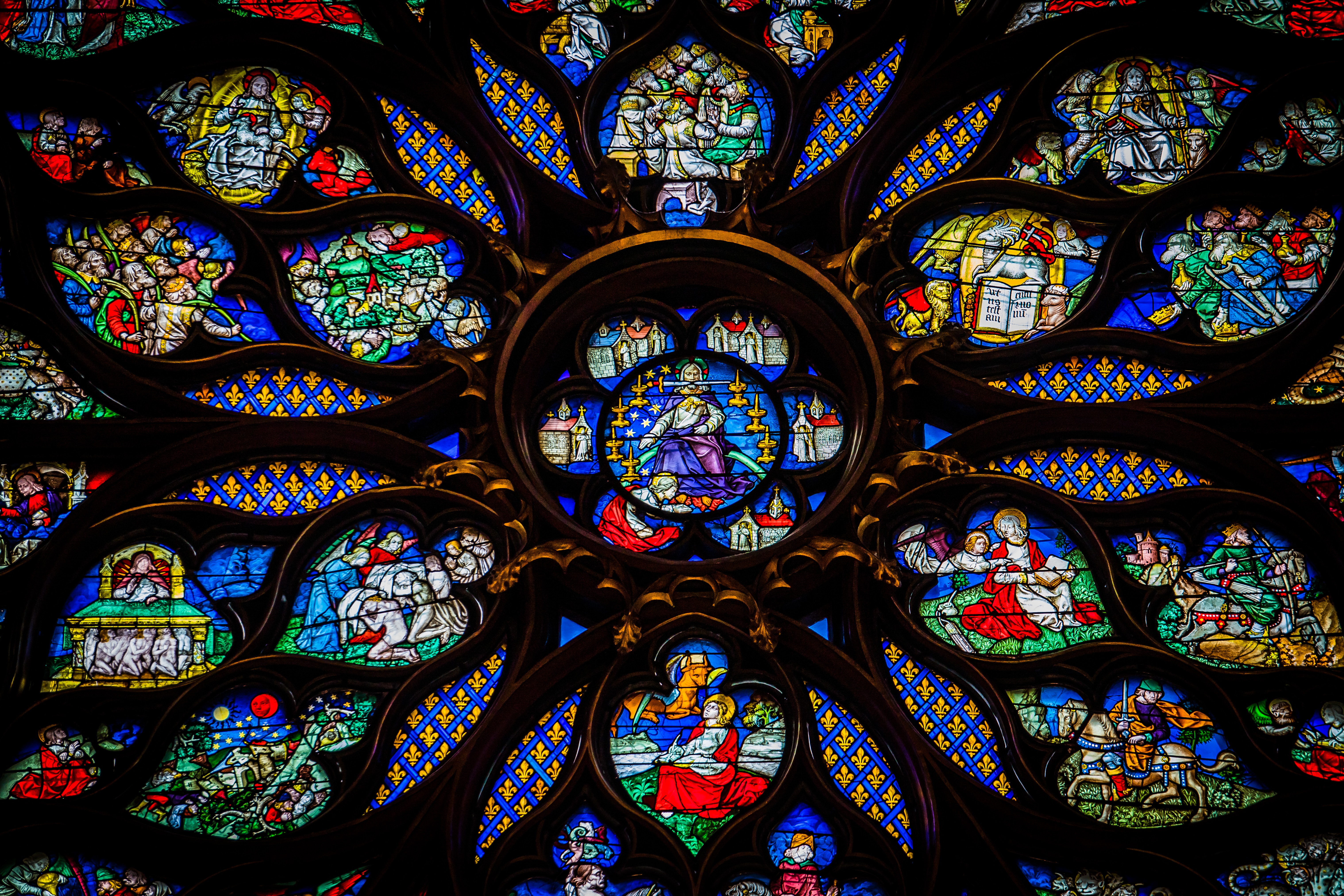
In Paris, history is written in stone
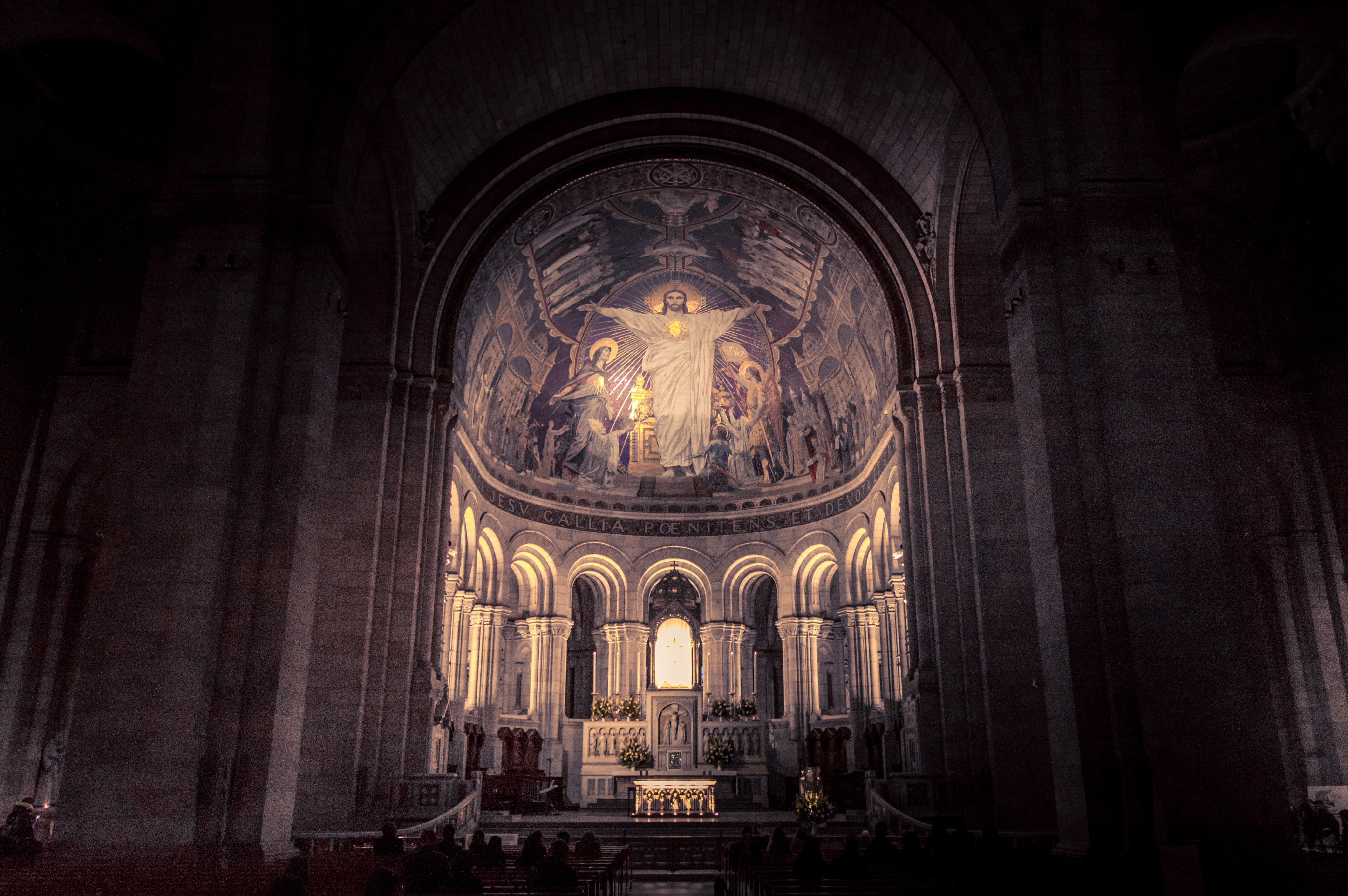
In Paris, “the cathedral route” takes on its full meaning: there is no district or arrondissement without one or more churches, often famous. On this themed ride, we forget neither the Notre-Dame cathedral on the Île Saint-Louis, nor the Sacré-Cœur in Montmartre.
The first remains one of the most emblematic monuments in France, and the most visited. For now, this 12th -century building is slowly being reborn from its ashes, after the fire that destroyed the spire and the whole roof in 2019. Its reopening to the public is planned for next year.
Its media alter ego, the Sacré-Cœur basilica, in the 18th arrondissement, takes over in the meantime. Its dome, rising 83 m high, makes it very visible, from afar! It was its creator, Paul Abadie, who decided on its Romano-Byzantine architecture (with dome, turrets and campanile) and the use of travertine (a white rock of extremely fine grain) for its construction.
It is impossible to list all the religious buildings that dot the capital. For pleasure, let us mention the Madeleine church in the 8th, a perfect illustration of the neoclassical style; Saint-Louis des Invalides church, attached to the hôtel of the same name; and for an unusual touch, the Saint-Alexander Nevsky cathedral, also in the 8th arrondissement, whose golden domes testify to its Russian Orthodox religious vocation.
The cathedrals of the Loire Valley
With Paris, the Seine and the Essonne in the rear-view mirror, you arrive in the Orléanais, Touraine and Anjou, territories of central France renowned for their gentle way of life. Four cathedrals accompany you along the route. The one in Orléans is dedicated to the Holy Cross and displays Gothic architecture of great beauty. In Blois, Saint-Louis cathedral dates from the 16th century. Its 33 bays covered with stained glass, signed by the Dutch artist Jan Dibbets, are particularly admirable.
In old Tours, Saint-Gatien cathedral is a pure jewel of Gothic religious architecture, remarkable for the opulence of its sculpted decoration. The city of Angoulême, for its part, is home to the Romanesque Saint-Pierre cathedral. A true history book carved in stone, it shows on its tympana and its high and low reliefs the great hours of the Christian religion.
Bordeaux, the city of 100 bell towers
Time flies: here you are already in Bordeaux, where “the cathedral route” leads you to Saint-André, characteristic of the style known as Angevin Gothic. Like its Bordeaux counterparts, the Saint-Seurin basilica and the Saint-Michel basilica, it is a UNESCO World Heritage site, in connection with the Routes of Santiago de Compostela. Bordeaux’s Saint-Michel basilica deserves your attention: it supports an openwork spire 114.60 m high. Its crypt was once famous for housing mummies, which attracted curious visitors as well known as Victor Hugo and Théophile Gautier. Since 1979, they have been buried in the Chartreuse cemetery in Bordeaux.
Do not forget the Sainte-Croix church on your Bordeaux tour: it houses a magnificent organ, made by the organ builder Dom Bedos de Celles, considered a masterpiece of its kind throughout the world. And for pleasure, head to the forecourt of the Notre-Dame church, whose Baroque style is a feast for the eyes!
On the way of the pilgrims to Santiago de Compostela
After the Loire Valley come Occitanie, the Landes and the Basque Country. In your heritage quest, stop in Dax. Famous for its thermal baths, the city of Dax can boast a very pretty cathedral dedicated to Notre-Dame, flanked by a splendid portal known as the “Apostles’ portal”.
A few more kilometres and you are in Saint-Jean-Pied-de-Port which marks the end of your route in France. Its Church of the Assumption of the Virgin is an important stop for pilgrims to Santiago de Compostela, before they reach Spain and the ultimate goal of their journey.
A lovely way to end this journey, which has taken you from cathedral to cathedral across France, following the route of La Scandibérique!